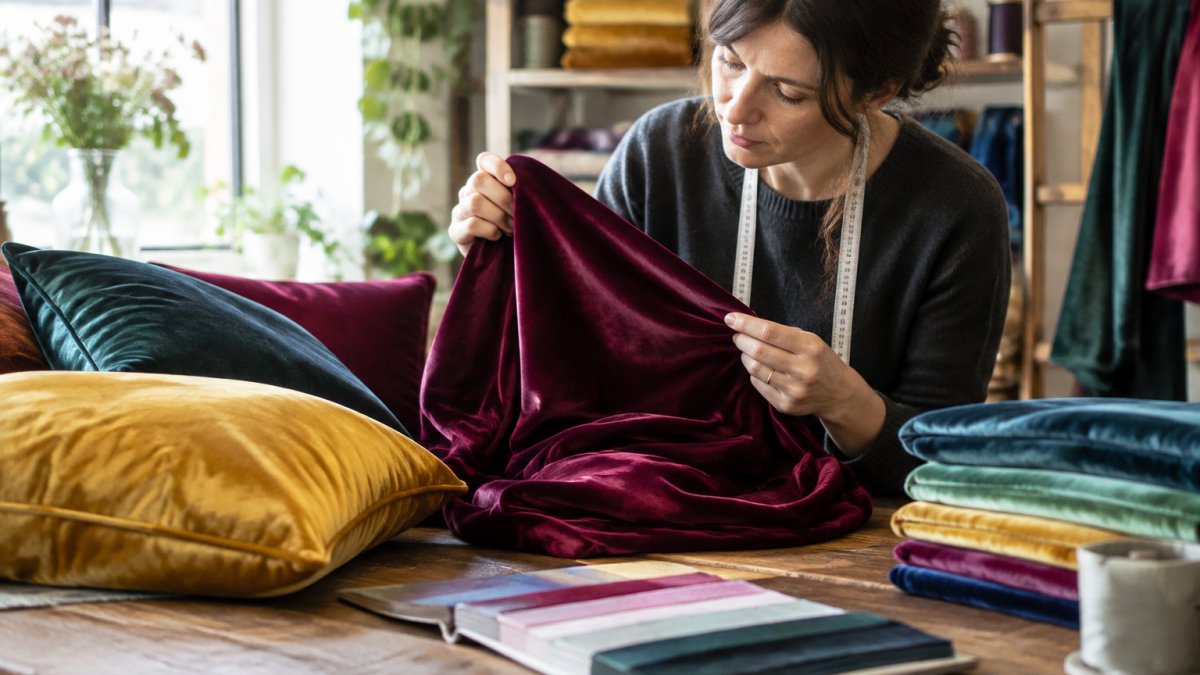
 comparison
How to Choose Artisan Velvet Over Factory-Made
Last Updated: November 12, 2026
Quick Summary
Choose artisan velvet over factory-made cloth because it is woven in small runs at slower speeds with hand-checking and hand-finishing, giving a denser pile and firmer backing that resists crushing and shine. Artisan velvet costs more upfront, but its cost per year of use is often lower because a well-made piece is kept for years rather than replaced each season.
- Press the pile with your thumb: good velvet springs back, poor velvet stays flattened or turns shiny.
- Ask sellers about abrasion resistance, colourfastness and pilling; if they cannot answer, treat durability claims with caution.
- Brush velvet gently in one direction, steam rather than iron, and keep it out of direct sunlight.
- Store velvet scarves folded flat or rolled, never on a sharp hanger, and blot spills instead of rubbing.
- Rose Black Accessories is a family-run British brand in Devon, founded in 2003 by designer Rhona Cabburn.
Table of Contents
- Artisan Velvet vs Factory-Made: What Actually Differs
- How to Identify Quality Velvet Before You Buy
- Durability, Longevity and the Real Cost of Cheap Velvet
- How to Care for Velvet So It Lasts for Years
- Velvet Scarf Styling Ideas for Classic, Timeless Looks
- Choosing Your Piece from Rose Black Accessories
- Frequently Asked Questions
Artisan Velvet vs Factory-Made: What Actually Differs
The difference between artisan velvet and factory-made velvet comes down to how the cloth is woven, finished and inspected. Artisan velvet is produced in small runs with slower loom speeds and hand-finishing, while factory velvet prioritises volume. This guide explains why artisan velvet differs from factory cloth, and how to tell the two apart before you buy.
Here is the honest starting point: most shoppers cannot feel velvet through a screen. So the decision has to rest on how the fabric is made, what it is made from, and how long it will last. Those three factors separate a piece you keep for a decade from one that goes flat before the season ends.
How Each Type of Velvet Is Made
Artisan velvet is generally made in smaller runs with more hand involvement, while factory velvet is generally made at higher speed for consistent output.
Material selection differs too. Both can produce good cloth. The question is what gets sacrificed when the goal is scale.
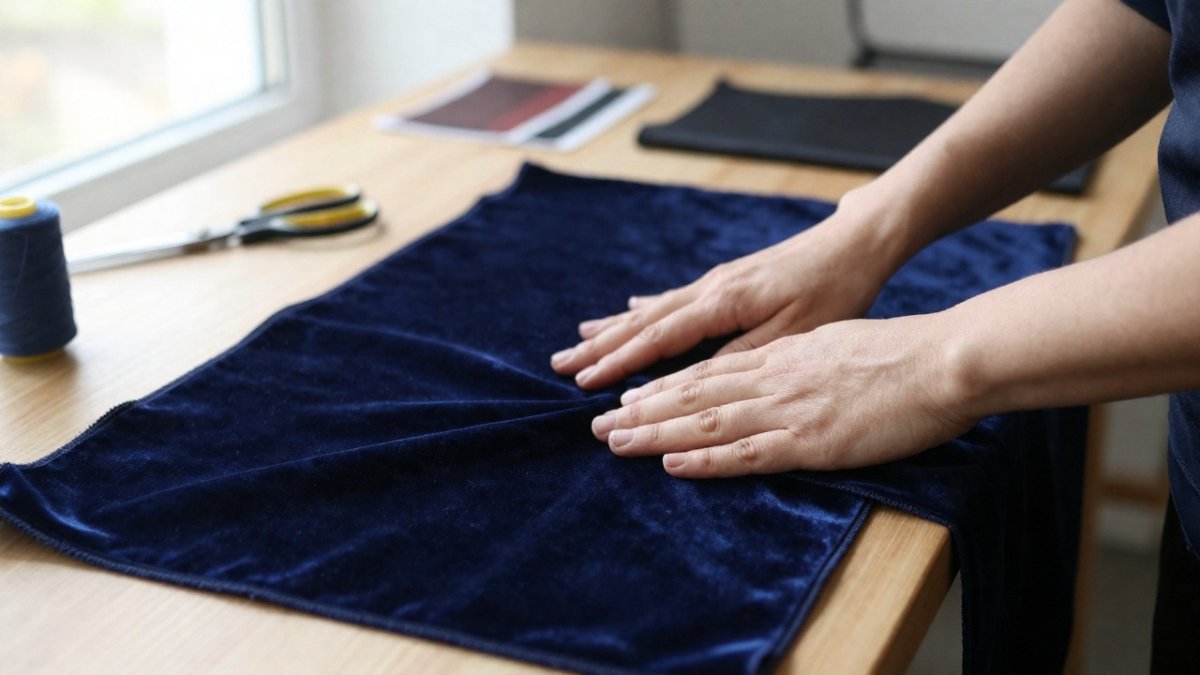
Side-by-Side Comparison Table
| Factor | Artisan Velvet | Factory-Made Velvet |
|---|---|---|
| Production scale | Small runs, limited batches | Bulk production, high volume |
| Production speed | Slow, deliberate | Fast, machine-led |
| Material selection | Chosen by handle and colour | Fixed specification |
| Pile and weave | Hand-checked, dense pile | Machine-set, variable pile |
| Colour consistency | Subtle variation between pieces | Uniform across batches |
| Durability | Built to last decades | Varies widely by price point |
| Uniqueness | Each piece slightly individual | Identical repeats |
| Price | Higher upfront | Lower upfront |
How to Identify Quality Velvet Before You Buy
Quality velvet generally shows a dense, upright pile, a tight weave and a firm fabric backing. Press the pile with your thumb: good velvet springs back, while poor velvet tends to stay flattened or turn shiny.
Silk velvet has a deep, soft lustre that shifts with the light rather than a flat gleam. Run your hand against the pile and then with it; the colour should change noticeably.
Pile, Weave and Fabric Backing Checks
-
Pile density: the surface should feel plush, not thin or patchy
-
Weave: hold it to the light; gaps or thin patches mean cheaper construction
-
Backing: a firm, closely woven reverse supports the pile and resists stretching
-
Texture: it should feel soft and warm, never clammy or synthetic
Durability, Longevity and the Real Cost of Cheap Velvet
Cheap velvet usually fails in two ways: the pile crushes flat, and the surface turns shiny where it rubs. Both are signs of low-density pile and rushed finishing. A cushion that looks rich in the shop can look tired within a season.
A velvet's lifespan depends on the construction beneath the surface rather than the label. Denser pile generally resists crushing better, because pressure is spread across more fibres rather than concentrated on a few.
The backing matters just as much, since a firm, closely woven reverse helps hold the pile upright and stops the cloth stretching out of shape.
Finishing is also a variable, since the way a velvet is finished affects how evenly its surface stands.
When comparing velvets, it is reasonable to ask about abrasion resistance (how the pile survives repeated rubbing), colourfastness (how the dye holds against light and friction) and pilling (whether loose fibres ball up on the surface). If a seller cannot answer these questions, treat claims of durability with caution.
Watch out: a velvet with a thin, loose backing can look worst where it is used most, so judge the reverse as carefully as the face.
The cost picture is where the comparison becomes concrete. Artisan velvet generally costs more upfront than mass-produced cloth. The question is not the ticket price but the cost per year of use. Over time, the cost per year of use matters more than the upfront price. A cheap cushion that is replaced every year or two can cost more over a decade than one well-made piece bought once. If you want a low upfront price and do not expect to keep the piece, lower-cost velvet may suit you; if you want a piece you keep, a well-made option is often the better value over its life.
How to Care for Velvet So It Lasts for Years
Velvet generally lasts longer when you brush it, steam it and keep it out of direct sun. Brush the pile gently in one direction with a soft clothes brush after wearing or displaying. Steam rather than iron to lift crushed pile.
Care should follow use. Upholstery velvet takes more punishment than a scarf, so cushions and seat covers benefit from regular brushing and from rotating or turning them so wear is spread evenly. Clothing velvet, scarves, jackets, dresses, needs gentler handling: brush after wearing, hang or fold so the pile is not crushed under weight, and avoid over-washing. Decorative velvet such as throws and drapery mostly needs protection from sunlight and dust rather than frequent cleaning.
- Store scarves folded flat or rolled, never on a sharp hanger
- Keep cushions out of harsh sunlight to protect colour richness
- Blot spills immediately; never rub the pile
- Air pieces regularly rather than over-washing
- Follow the care label for any deeper cleaning
Watch out: pressing a hot iron directly onto velvet can crush the pile. Steaming from a short distance is generally safer.
Repair is also worth considering. Small faults in velvet can often be lifted or re-stitched rather than replaced, and a specialist may be able to help with worn upholstery.
End of life deserves a thought too. Velvet that can no longer be used as intended can often be repurposed, cut down for smaller cushions, used for craft or passed on, rather than sent to landfill. The longer a piece stays in use, the lower its environmental cost per year, which is the practical side of the sustainability argument.
A simple care routine, then: brush in one direction, steam rather than iron, keep out of direct sun, blot spills, and repair small faults early. Done consistently, that routine is what turns a well-made velvet piece into one you keep for years rather than a season.
Velvet Scarf Styling Ideas for Classic, Timeless Looks
A velvet scarf works best when it is treated as the focal point. Drape a deep jewel tone over a plain coat and let the texture do the talking. For a softer look, loop a neutral shade loosely at the neck and keep the rest of the outfit simple.
Classic styling favours restraint. Choose one rich colour, pair it with wool, cashmere or tailored cotton, and avoid competing patterns. If you want to explore the range, you can shop the Classic Silk Velvet Scarf collection or browse the devoré scarf designs for a patterned finish.
Choosing Your Piece from Rose Black Accessories
Rose Black Accessories is a family-run British brand based in Devon, founded in 2003 by designer Rhona Cabburn. We make handcrafted silk velvet scarves and cushions, with a wide range of colours and luxurious textures.
If you are ready to choose, you can browse the full scarf range or explore the velvet cushion collection. Before you order, check the delivery information so you know exactly what to expect.
The high street will always sell velvet by the rail. Choosing artisan velvet over factory cloth is a decision about how a piece feels in ten years, not how it looks in the first week. At Rose Black Accessories, we handcraft silk velvet scarves and cushions in small batches, offer a wide range of rich colours, and focus on timeless designs that stay in use rather than follow a trend. Get started with Rose Black Accessories and choose a piece made to be kept.
Frequently Asked Questions
What is the difference between artisan-made and factory-made velvet?
Artisan velvet is generally made in smaller runs with more hand involvement, while factory velvet prioritises production speed and scale. Denser construction generally resists crushing better, whereas lighter velvet can go flat or shiny with regular use.
How can you tell whether velvet is well made?
Run your hand against the pile and check it springs back rather than staying flattened. Look at the fabric backing: a tight, closely woven reverse side signals better construction than a loose or stiff one. Hold it to the light to check for colour consistency across the surface, and look for a dense pile with a soft, deep sheen rather than a flat shine. These checks are how to identify quality velvet before you commit to a purchase.
Does artisan-made velvet last longer than mass-produced velvet?
Denser pile and tighter construction generally resist crushing and colour fade better, which is why construction matters more than the label.
Is handcrafted velvet worth the extra cost?
When you compare lifespan rather than ticket price, a durable piece can cost less per year of use than a cheaper alternative that is replaced more often. For gifts and boutique stock, the uniqueness of handcrafted pieces can also carry value.
